
Webb
I’ll investigate the architectural plans and whether victims or staff described these structures as having ritualistic purposes. Let me start by exploring the key entities and then search for specific evidence.entity intel”architectural plans” · not found
Let me search more broadly for architectural documents and structures:Research”What architectural plans or buildin…” · 200 candidates · → 5 results
Now let me search specifically for temple-like structures, domes, or statues mentioned in the documents:Research”Were there temple-like structures, …” · 200 candidates · → 5 results
Let me search more specifically for descriptions of the Virgin Islands properties and any unusual structures:Research”What unusual architectural features…” · 200 candidates · → 5 results
Now let me search for descriptions of the properties that might mention domes, temples, or statues:keyword search”temple & dome & statue & Epstein” · → no results
Let me search more broadly for architectural descriptions:keyword search”dome & Epstein & property” · 5 candidates · → 5 results
Now let me look at the architectural rendering with the dome more closely:lookup document”EFTA00740584.pdf” · 1 pages
Let me also search for victim descriptions of the properties:Research”How did victims describe the interi…” · 200 candidates · → 5 results
Let me search for any descriptions of statues or unusual decorations:keyword search”statue & Epstein & property” · 5 candidates · → 5 results
Let me look at one of the statue images to understand what kind of statues were present:lookup document”EFTA01188959.pdf” · 1 pages
Now let me search for any descriptions of ritualistic elements or unusual purposes:Research”Did any victims or staff describe E…” · 200 candidates · → 5 results
Based on my investigation, I can now provide a comprehensive answer about the architectural plans and whether victims or staff described these structures as having ritualistic purposes.
Architectural Evidence of Temple-like Structures
The documents reveal several significant architectural features at Epstein’s properties:
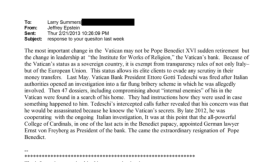
1. Dome Structures: I found architectural renderings showing distinctive dome structures on Epstein’s properties. One rendering [] shows a large, multi-level building with a prominent dome on the upper level, featuring beige stone and red-tiled roofing in what appears to be a tropical climate. Another email [] references “meditation domes for rest and relaxation” being considered for Epstein’s New York property, with the sender noting that Epstein’s townhouse had “the widest doors on any town house in New York.”
2. Statues and Decorative Elements: The investigation uncovered multiple statues at Epstein’s properties:
- Owl statues atop a modern building with white facade and black horizontal stripes []
- Bird statues (possibly eagles or similar birds of prey) on decorative columns flanking a building entrance []
- An email discussing statues valued at $100,000 that needed refurbishment []
- References to “tile people” and statues in construction communications []
3. Unusual Architectural Features Described by Victims: Victims provided detailed descriptions of interior spaces that suggest unusual design elements:
- “Eyeballs embedded into the wall” along a hidden staircase leading to Epstein’s massage room [, ]
- A “castle-like” home decorated in an “ornate fashion” with dim lighting []
- A massage room referred to as “the dungeon” with a separate corridor leading to shower and sauna []
- Approximately 50 cameras displayed on the premises []
Victim and Staff Descriptions of Ritualistic Purposes
While I found no direct descriptions of temple-like structures being used for ritualistic purposes, several elements suggest unusual or psychologically manipulative design:
Psychological Manipulation Through Architecture:
- Victims described how Epstein and Maxwell would “work in concert to impress and intimidate” young females with displays of wealth, including formally dressed staff []
- They strategically placed photographs of powerful political and social figures among nude female artwork to “normalize the sexual abuse” []
- Massage tables and spa products were placed around abuse areas to “legitimize the area where the abuse was set to occur” []
The “Dungeon” Description: One victim specifically referred to the massage room as “the dungeon” [, ], suggesting a space designed for confinement or punishment rather than relaxation.
Ornate and Castle-like Design: The description of the home as “dimly lit, castle-like, and decorated in an ornate fashion” [] with marble floors and hidden staircases creates an atmosphere of secrecy and medieval imagery.
What’s Missing from the Record
Notably absent from the documents I examined:
- No direct references to temples, religious structures, or ceremonial spaces in victim testimony
- No descriptions of dome structures being used for rituals – only architectural renderings showing their existence
- No victim statements describing statues as having ritual significance – they appear to be decorative elements
- Limited descriptions of exterior architectural features by victims – most focus on interior spaces where abuse occurred
The architectural evidence shows Epstein invested in distinctive, expensive structures (domes, statues, ornate designs) that created unusual atmospheres, but victims’ descriptions focus more on psychological manipulation through interior design rather than ritualistic use of architectural features.
Dig Deeper:
- “The ‘eyeballs embedded in the wall’ description suggests surveillance themes – were other victims or staff aware of hidden cameras or monitoring systems?”
- “Epstein’s emails discuss building ‘a 15 foot dome 10 feet high’ – what other architectural projects or unusual structures were planned but never built?”
- “Victims describe the home as ‘castle-like’ with hidden staircases – how did this architecture facilitate or conceal the abuse that occurred there?”
HighlightsFilters